
Why Long-Term Investors Are Looking Beyond London Toward Greater Manchester
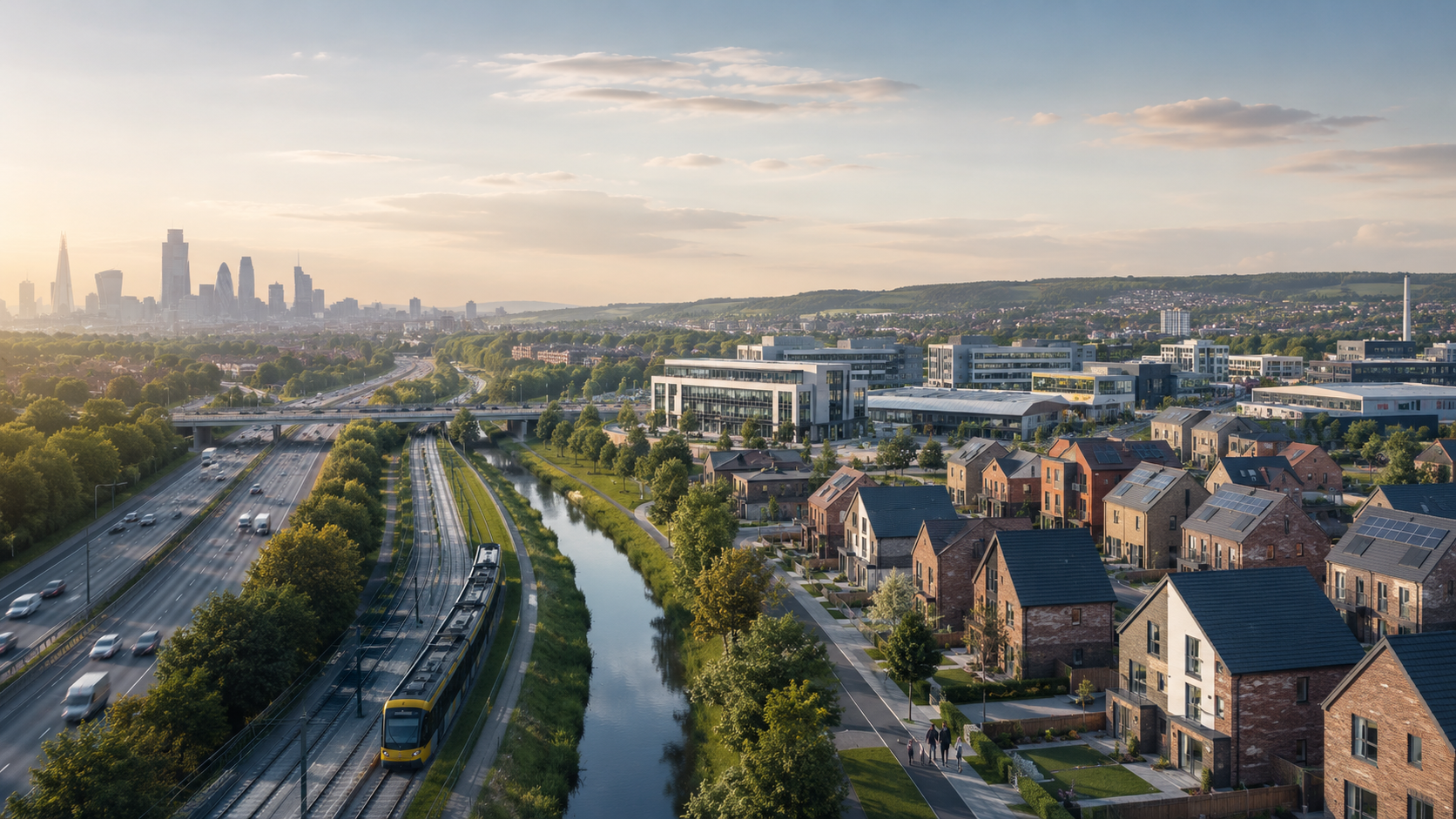
As international capital shifts away from the high-friction environment of the London property market, sophisticated investors are refocusing on Greater Manchester’s structural economic repositioning. This article examines how the Atom Valley innovation corridor and the 'Places for Everyone' regional framework are driving long-term housing demand in Rochdale, Oldham, and Bury. By moving beyond short-term "hotspot" speculation and focusing on the interplay between advanced manufacturing, infrastructure connectivity, and local affordability, investors are identifying a more sustainable path for long-term capital preservation in the UK.
The Strategic Pivot: Shifting Capital from London to the Northwest
For decades, the standard path for overseas property investors was simple: London. The capital offered liquidity, global prestige, and perceived safety. However, as acquisition costs have risen and yields have compressed, the "default" choice has become harder to justify.
Investors are now asking a more fundamental question: "Where are the long-term structural changes actually happening?"
This shift in inquiry has moved the focus from the saturated London market to the Northwest of England, specifically the industrial corridor spanning Rochdale, Oldham, and Bury.
The Atom Valley Engine: Rethinking Regional Economics
The narrative in Greater Manchester is evolving. While the city centre has long dominated the headlines, healthy regional economies require a diverse industrial base.
The Atom Valley project, supported by the Northern Gateway Mayoral Development Corporation, is the catalyst for this diversification. By integrating advanced manufacturing, materials science, and logistics, this initiative is transforming the region’s economic foundation.
Rather than a short-term property boom, Atom Valley represents long-term economic repositioning. This is structural growth designed to endure, anchored by:
Institutional Alignment: Coordinated efforts through the Places for Everyone framework.
Infrastructure Synergy: Aligning housing supply with planned transport and industrial investment.
Job Creation: Anchoring high-value employment in the Northeast corridor.
Why Employment Infrastructure Drives Housing Stability
Speculative property investment often ignores the connection between employment and housing. However, sustainable property performance is rarely driven by marketing campaigns, it is driven by households building stable lives.
The "Stability Chain":
Higher-Value Employment: Industry-leading manufacturing and tech jobs move into the region.
Settled Households: Families remain in the area longer, reducing tenant turnover.
Income Alignment: Household incomes catch up with housing costs, improving long-term affordability.
Community Resilience: Stable households create predictable, reliable rental demand.
Investors who focus on this "Stability Chain" mitigate risk far more effectively than those chasing headline-driven hotspots.
The Information Asymmetry: Why Local Positioning Beats National Headlines
The most significant shifts in property markets are rarely public until they are already reflected in higher prices. By the time an area is branded a "hotspot" by national media, the easy positioning has already passed.
The Operational Advantage: Operating locally provides a "signals intelligence" advantage:
Tenant Sentiment: Noticing the change in who is seeking residency before the data captures it.
Employer Activity: Observing corporate expansion plans in real-time.
Sentiment Shifts: Detecting local business confidence before it reaches regional statistics.
Successful long-term investment is not about predicting the future; it is about observing the fundamentals on the ground while they are still quiet.
Investment Fundamentals: What Makes a Market Durable?
When the excitement of the "next big thing" fades, what remains? The strongest long-term investments are often the most "boring" ones, characterized by several non-negotiable fundamentals:
Affordability: Ensuring housing costs remain within reach of the local working population.
Connectivity: Strategic transport investments that link labor pools to employment zones.
Economic Strategy: Development plans that are tied to long-term government and regional policy (like the Places for Everyone framework).
Sustainable Growth: Population and employment growth that aligns with existing local infrastructure.
Final Thoughts: The Case for a Forward-Looking Strategy
Greater Manchester’s growth is not merely a trend—it is a logical alignment of infrastructure, employment, and housing policy. For the overseas investor, the North West is no longer just a "fashionable" alternative to London; it is becoming a fundamental necessity for a balanced portfolio.
The changes happening across parts of Rochdale, Oldham, and Bury are still in the early stages of their cycle. While we cannot predict the future with perfect accuracy, we can identify when the foundations of long-term economic growth are being laid.
Thinking long-term? Successful property investment is about recognizing these shifts and positioning yourself early. The Greater Manchester story is moving from "interesting" to "essential."
Optimize Your Portfolio Strategy
Are you looking to move beyond the headlines and explore data-driven opportunities in the North West? We facilitate straightforward, transparent conversations about long-term portfolio stability.