
How to Build a Resilient Property Portfolio: Lessons from Years of Investing and Managing Property
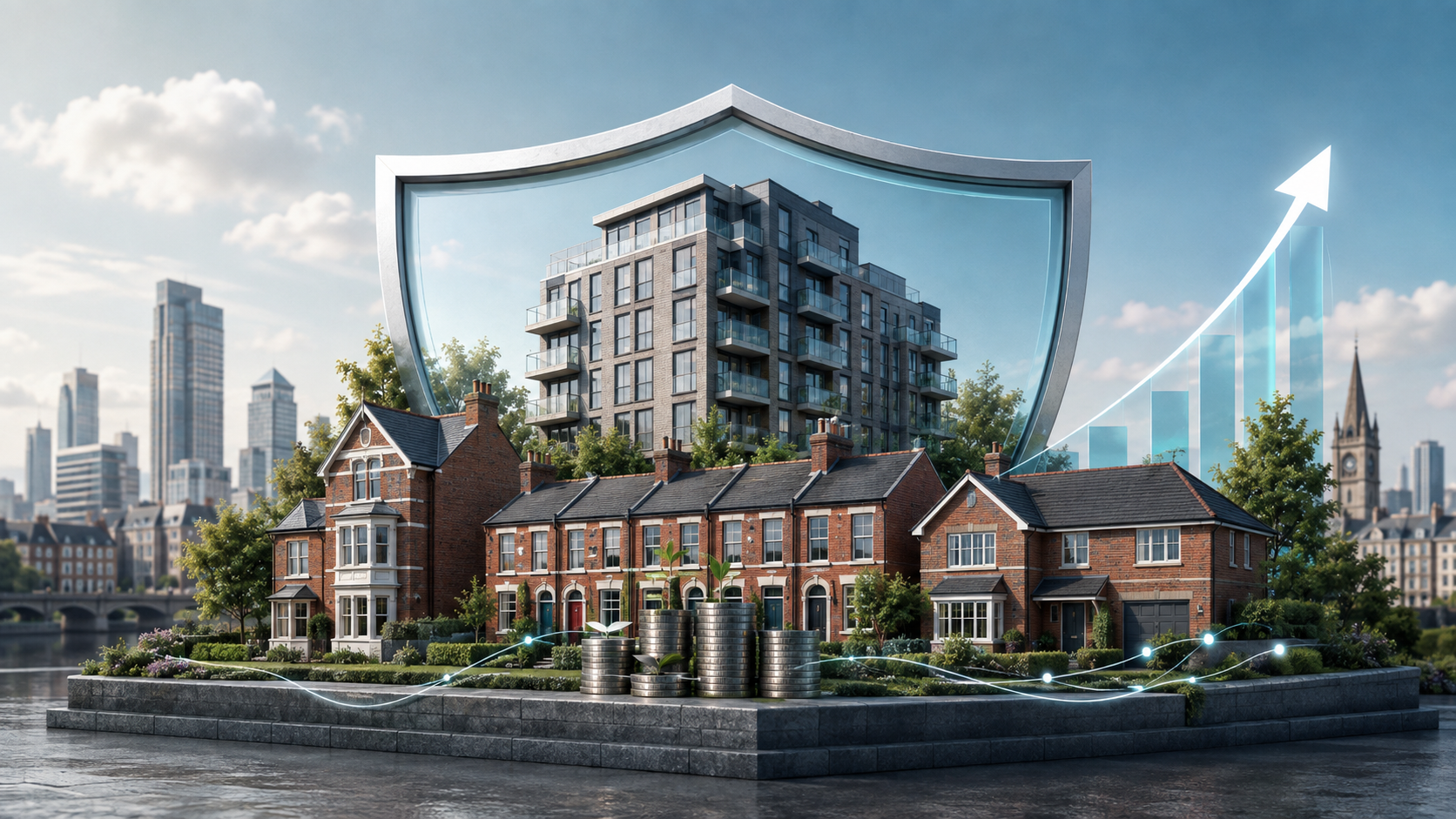
When people first start investing in property, most of the questions tend to focus on the next purchase.
Should I buy a house or an apartment?
Is this area going to grow?
What's the yield?
They're all sensible questions, but over time I've found myself thinking rather differently. The individual property still matters, of course, but I've gradually become much more interested in the portfolio than the purchase.
A good investment can certainly improve a portfolio.
A poor portfolio, however, can undermine a collection of perfectly good investments.
For me, that's one of the biggest lessons experience has taught.
There Isn't a Universal "Best" Property
One of the questions I'm asked most often is whether I prefer houses or apartments.
The honest answer is that I don't.
I've owned both, we manage both, and I've seen investors build successful portfolios using each.
The better question is whether the property suits the market you're investing in.
A city centre apartment might be exactly what young professionals are looking for in Manchester, while a family house in a suburban location could produce far stronger long-term demand elsewhere.
The building itself isn't the starting point.
The tenant is.
Understanding who wants to live there, why they choose that location and how that demand is likely to evolve over the next decade is far more important than deciding that one property type is always superior to another.
Don't Just Buy Properties. Build a Portfolio.
Another question that often comes up is whether I'd rather own one £500,000 property or five £100,000 properties.
Like most things in property, the answer is that it depends.
One higher-value property may offer stronger capital growth and simpler management.
Several smaller properties may provide diversification, multiple income streams and greater flexibility if circumstances change.
The important point isn't which option is objectively better.
It's recognising that you're building a portfolio, not simply collecting individual assets.
Every purchase should strengthen the whole portfolio by improving resilience, balancing risk and creating more options for the future.
Why Cash Flow Matters More Than Ever
If there's one lesson that has become increasingly important to me over the years, it's the value of dependable cash flow.
Property investors naturally talk about returns and capital growth, but cash flow often receives much less attention than it deserves.
Reliable income allows you to replace a boiler without creating financial pressure.
It allows you to deal with void periods calmly rather than making rushed decisions.
It allows you to reduce debt, improve properties and, perhaps most importantly, take advantage of opportunities when other investors are struggling.
Periods of economic uncertainty have a habit of exposing the difference between portfolios that rely on optimistic assumptions and portfolios that are built on strong cash flow.
The latter usually have more choices available to them.
Growth Should Follow Understanding
One mistake I see fairly regularly is investors expanding before they've really understood what they've already built.
The temptation after buying a successful first property is to move straight on to the second.
Sometimes that's the right decision.
Often it isn't.
Owning property teaches lessons that spreadsheets never can. Maintenance costs become real rather than theoretical. Financing feels different when interest rates change. You begin to understand tenant behaviour, contractor relationships and what makes one property remarkably straightforward to own while another demands constant attention.
The same principle applies to buying businesses.
Acquiring another business rarely fixes operational weaknesses. More often, it magnifies them.
Property portfolios behave in much the same way.
If your systems are weak, buying more properties simply creates more opportunities for those weaknesses to appear.
Scale should follow understanding.
Why the Best Portfolios Are Often the Least Exciting
Property investment is often presented as a constant search for the next opportunity.
The next hotspot.
The next refinance.
The next acquisition.
The longer I've been investing, the less attractive that approach has become.
Today, I find myself drawn towards portfolios that are, if I'm honest, rather boring.
Properties that let consistently.
Tenants who stay.
Reliable income arriving every month.
Steady appreciation over many years because the local economy remains healthy and people continue choosing to live there.
Those portfolios rarely generate exciting conversations.
What they do generate is confidence.
Confidence that the portfolio can withstand changing markets, unexpected repairs and periods of economic uncertainty without forcing difficult decisions.
A Different Definition of Success
Looking back, I think my definition of a successful property portfolio has changed quite significantly.
I no longer judge it by the number of properties it contains or how quickly it's growing.
I judge it by how resilient it is.
Can it cope with higher interest rates?
Can it absorb unexpected costs?
Can it generate enough cash flow to create future opportunities rather than simply covering today's expenses?
Can I sleep well at night knowing it isn't dependent on everything going perfectly?
For me, those have become much more useful questions than asking whether the next property might outperform the market.
Building wealth through property has never really been about finding spectacular investments.
It's about making sensible decisions consistently over a long period of time, building systems that can be repeated, and creating a portfolio that quietly compounds while giving you the freedom to make good decisions when opportunities eventually arise.
At Northbridge Property Advisory, that's the philosophy that underpins every investment discussion we have. Our focus isn't simply on helping investors buy another property. It's on helping them build a portfolio that remains resilient, adaptable and capable of creating long-term wealth, whatever the market happens to do next.